Statement: BC-Canada Cooperative Prosperity Agreement
August 20, 2026
Opinion: This year’s drought pitted fish against farms. B.C. must do better
September 18, 2026Media Release: Sovereignty starts upstream: nine in ten British Columbians say fresh water is a matter of national security
New McAllister poll: 90% agree protecting Canada’s fresh water is vital to national sovereignty and security — 86% of BC Conservatives, 94% of BC NDP and 94% of BC Green supporters. 92% say the B.C. government is accountable for it. Coalition asks Province to act now.
VANCOUVER, B.C. — September 15, 2026 — A new province-wide survey, conducted in the same fortnight that the U.S. President signed an order renaming Lake Ontario “Lake America,” posted a map showing Canada under the American fl ag, and imposed 50 per cent tariffs on Canadian goods, fi nds that British Columbians already treat their fresh water as a matter of national security — and expect their provincial government to defend it.
Ninety per cent of British Columbians agree that “protecting and responsibly managing Canada’s freshwater systems is vital to our national sovereignty and security,” including 53 per cent who strongly agree. Two per cent disagree.
The agreement holds across every political line the survey measured: 86 per cent of BC Conservative supporters, 94 per cent of BC NDP supporters, 94 per cent of BC Green supporters and 93 per cent of undecided voters. It holds among households that work in mining, oil and gas, forestry and other resource industries (86 per cent), in every region of the province (89 to 97 per cent), and in every age group — 96 per cent of British Columbians over 65, and 86 per cent of those under 35.
“Sovereignty has been the story of 2026, but British Columbians are not thinking about it only in terms of tariffs and borders,” said Angus McAllister, principal of McAllister Opinion Research, which conducted the survey. “They have already connected the dots: you cannot defend a country whose rivers run dry every July. When a foreign president starts renaming our lakes, people don’t reach for abstractions. They reach for what is theirs — and in this province, that starts with water.”
The survey of 2,005 B.C. adults was conducted August 27 to September 1, 2026, by McAllister Opinion Research for the BC Watershed Security Coalition, a non-partisan alliance of more than 57 organisations representing 285,000 British Columbians. It is the sixth wave in a research program that has tracked B.C. opinion on fresh water since 2010.
The threat is no longer somewhere else
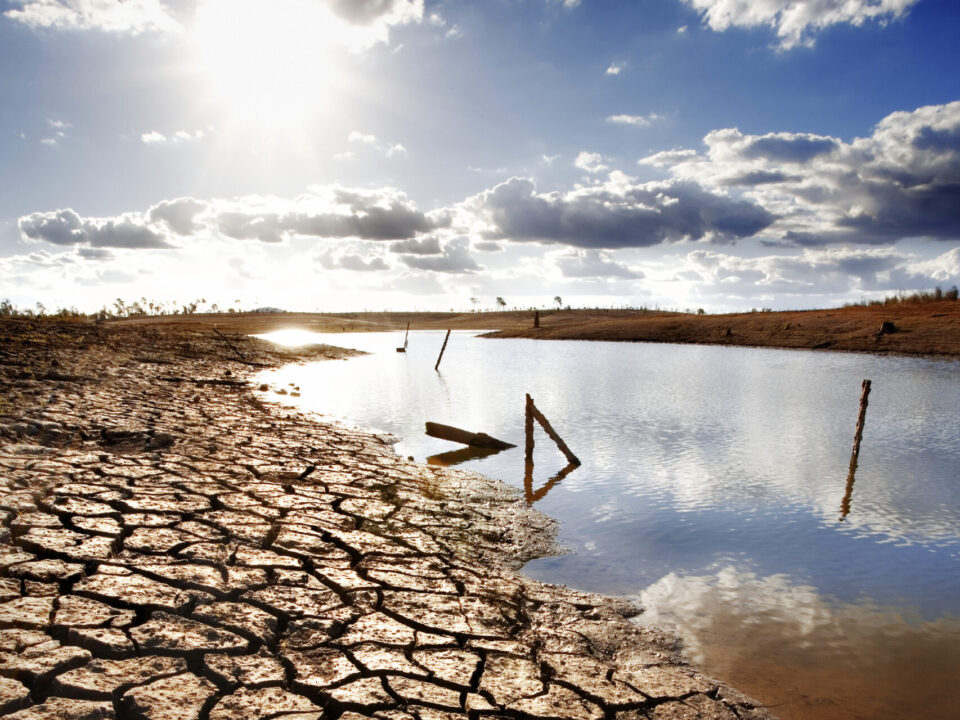
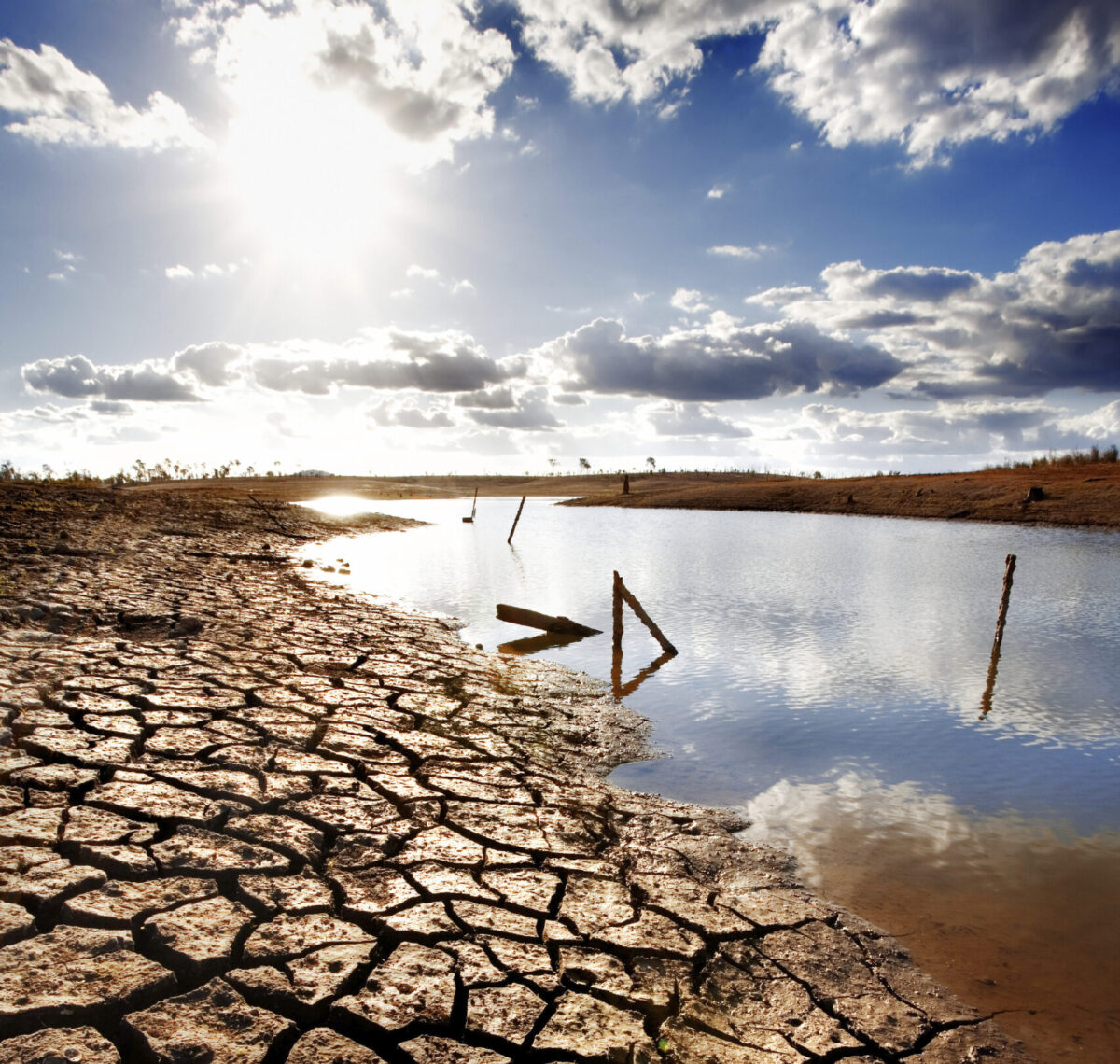
British Columbia is in its fourth consecutive summer of water insecurity. Vancouver Island’s snowpack measured zero per cent of normal in June. Rivers and lakes in the Okanagan and Vancouver Island experienced record low flows, wells have run dry, and the province ordered irrigators to stop water use in the Salmon and Bessette watersheds due to risks to endangered salmon runs. The public has noticed:
• 71 per cent are concerned about the potential for a major water crisis in their own community in the next few years — up from 57 per cent when the identical question was asked in 2018. Seven per cent say the crisis has already arrived.
• 80 per cent agree B.C. needs a strong provincial government to stand up to Ottawa and defend its interests.
• 71 per cent agree that strict environmental, health and safety standards should be “the price of doing business in Canada — not the price Canadians pay to attract foreign investment.”
• 61 per cent are extremely or quite concerned that the fast-tracking of major new resource projects — large mines, natural gas fracking and data centres — will increase demand on the province’s fresh water. Two-thirds (66 per cent) are concerned about water use by AI data centres.
• 92 per cent say the B.C. provincial government should be held accountable for ensuring fresh water is protected — ahead of the federal government (63 per cent), regional (57 per cent) and local governments (56 per cent).
“Canadians are being told that to be strong, we have to build fast,” McAllister said. “British Columbians agree we need a strong government. But seven in ten also say strict standards are the price of doing business here, not a bargaining chip. That is a mandate for building with the water accounted for — not around it.”
What British Columbians want done
Support for the practical measures is as broad as the principle:
• 90 per cent support strict monitoring and enforcement to protect water sources from toxic spills and industrial activity.
• 89 per cent support rebuilding natural defences — wetlands, mature forests and natural streambanks — to combat floods, fires and drought.
• 83 per cent support raising water rates for B.C.’s largest industrial users to pay for fresh water protection, after being shown that B.C. charges up to $2.25 per million litres while Quebec charges up to $159. Support is 83 per cent in both urban and rural B.C. and 84 per cent among resource-industry households.
• 57 per cent want that money placed in an independently-run Watershed Security Fund dedicated to protecting fresh water; 27 per cent would send it to general revenue.
• A $2-billion Watershed Security Fund is called a good idea by 76 per cent — ahead of every other public project tested, including the Iona Island wastewater plant (64 per cent), Site C (61 per cent) and the Trans Mountain pipeline (54 per cent). A $5-billion fund scores 75 per cent.
• 66 per cent say securing B.C.’s fresh water should be a high or the highest priority for the provincial government compared with everything else it spends money on. Four per cent call it a low priority.
The Ask: Province needs to act now to secure fresh water
“Sovereignty is not only a border question. It is whether a country can keep its own communities in water, food and safety through a changing climate,” said Coree Tull, Chair of the BC Watershed Security Coalition. “British Columbians have told the Province, in numbers that cross every party line, what they expect: ensure the largest industrial water users pay a fair rate, put that money into BC’s Watershed Security Fund, and put people to work protecting and rebuilding the natural defences our communities depend on. The challenge isn’t a lack of solutions — it’s a lack of delivery.”
Local governments meet in Victoria this week for the Union of BC Municipalities convention (September 14–18), where resolutions calling for modernised industrial water rates (Lake Country) and a funded provincial framework for local watershed boards (Sunshine Coast Regional District) are on the fl oor.
“Communities like ours are asked to deliver housing, growth and safe drinking water without the funding or the tools, ” said Justine Gabias, Vice Chair, Sunshine Coast Regional District. “A fair rate on the biggest water users and a funded local watershed board is how we get ahead of the next drought instead of reacting to it.”
The Coalition is asking the Premier and the Ministers of Finance and Water, Land and Resource Stewardship to:
1. Make a decision to modernize industrial water rates by October 31, 2026, with revenue dedicated to the Watershed Security Fund.
2. Implement a funded framework for local watershed boards or authorities, co-developed with First Nations and local governments, that says who decides, who pays and who must respond.
3. Stand up for the Province’s fresh water by securing federal funds to capitalize a $2 Billion Watershed Security Fund to resource monitoring programs and rebuild BC’s natural defences.
“Ninety per cent of British Columbians see fresh water as critical to national security and something we must defend,” said Tull “Ottawa cannot do that job for the Koksilah River or Vancouver Island’s snowpack. The Province can, and British Columbians have said whose job it is. The government knows the risks. The question people are asking is what will be in place before the next dry summer — and the next storm.”
A note on the numbers
The sovereignty-and-security statement was asked of all respondents as part of a values battery; it does not mention the United States, tariffs or any individual. The connection to current events is the Coalition’s interpretation, not a survey fi nding. The rate question was preceded by the B.C.–Quebec comparison shown above; the full wording of every item quoted, with breakdowns by region, age and party, is in the attached backgrounder.
Methodology. Provincial online survey of n=2,005 British Columbia adults (18+), fi elded August 27 to September 1, 2026, in English, using multi-modal online recruitment including professional-recruited online research panels, with regions outside Metro Vancouver oversampled. Results are weighted to the Census by region, gender, age and education. Online panel samples are not probability samples; a comparable Bayesian credibility interval for the full sample is ±2.7 percentage points, 19 times out of 20, and is wider for sub-groups. Percentages are of valid responses. McAllister Opinion Research is a member of ESOMAR and AAPOR.